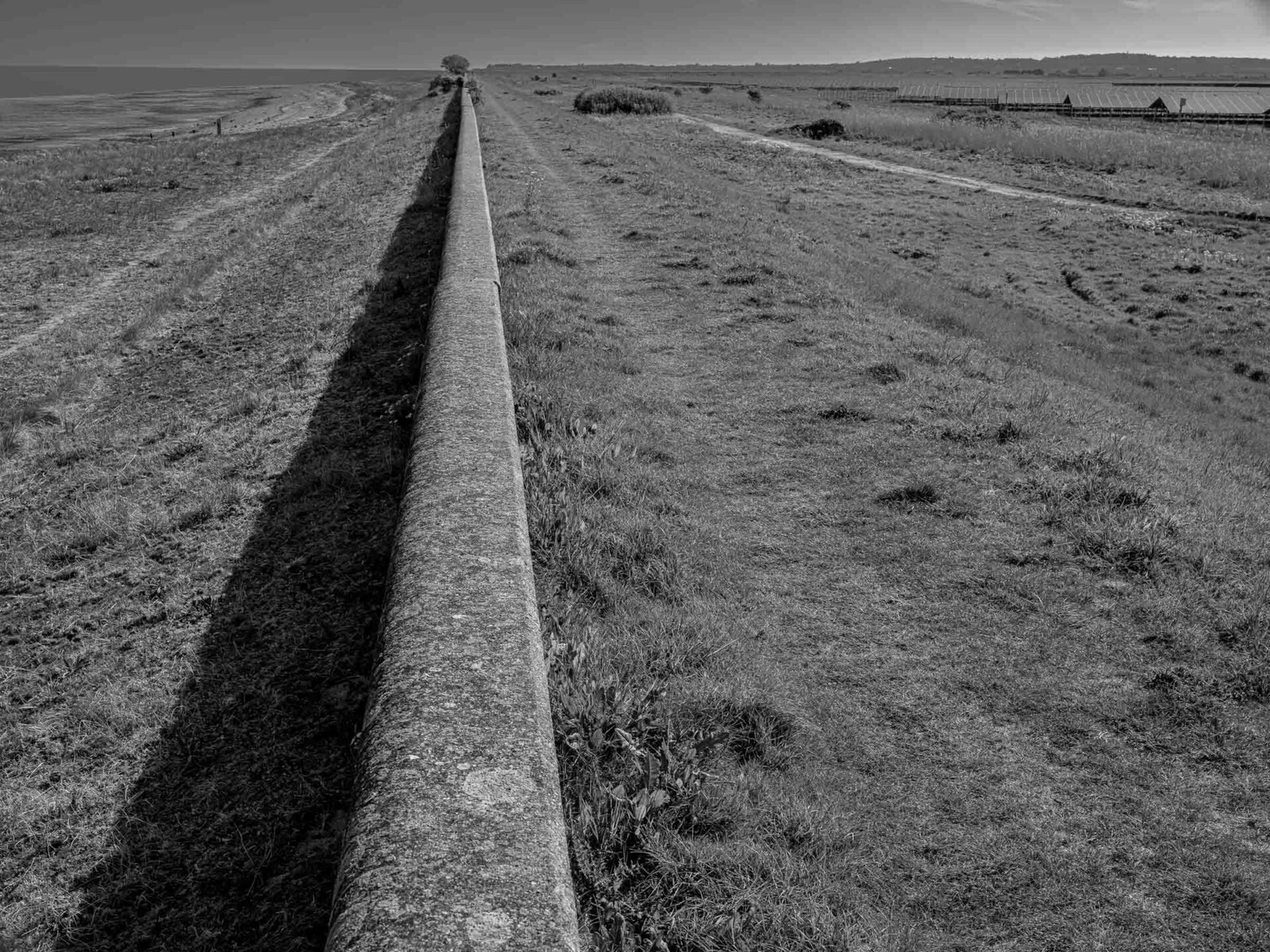
One sunny Saturday morning a few weeks ago I found myself driving towards the east Kent coast to visit Cleve Hill Solar Park which claims to be the largest solar farm in the UK. As I drove the hour or so to the coast I wondered to myself what I would find. Would the scale take my breath away? Would I feel hopeful that here – on some low-lying marsh land in the Garden of England – I was seeing tangible evidence of our energy transition, of our gradual but accelerating move away from dependence on fossil fuels?
However, as it turned out the experience left me a little frustrated and more than a little underwhelmed.
Cleve Hill was not that easy to find. Unlike the huge looming presence of the nuclear reactors I’d previously visited at Sizewell or Dungeness, you cannot see a solar panel field from a big distance on low lying flat land. Furthermore, they tend to have been developed on what was previously private farmland in pretty rural places so require a little bit of persistence to find. My reliance on Apple Maps inevitably took me to a dead end single track lane. A bit of cursing and three point turning later, I eventually retraced my way back down the dead end road and decided to head out to the coastline as I knew there was a footpath along the seafront that separated the solar panel farm from the sea wall.
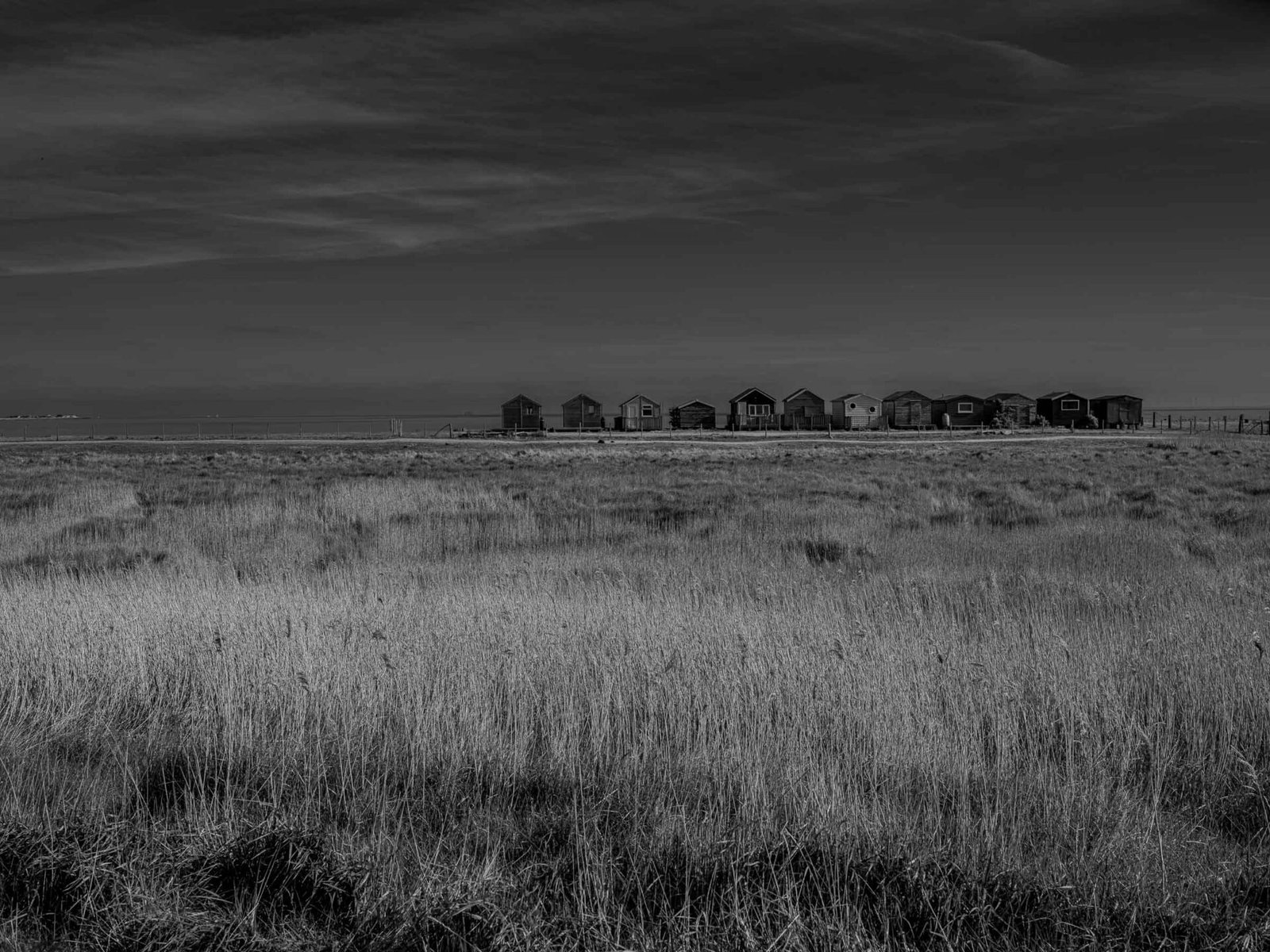
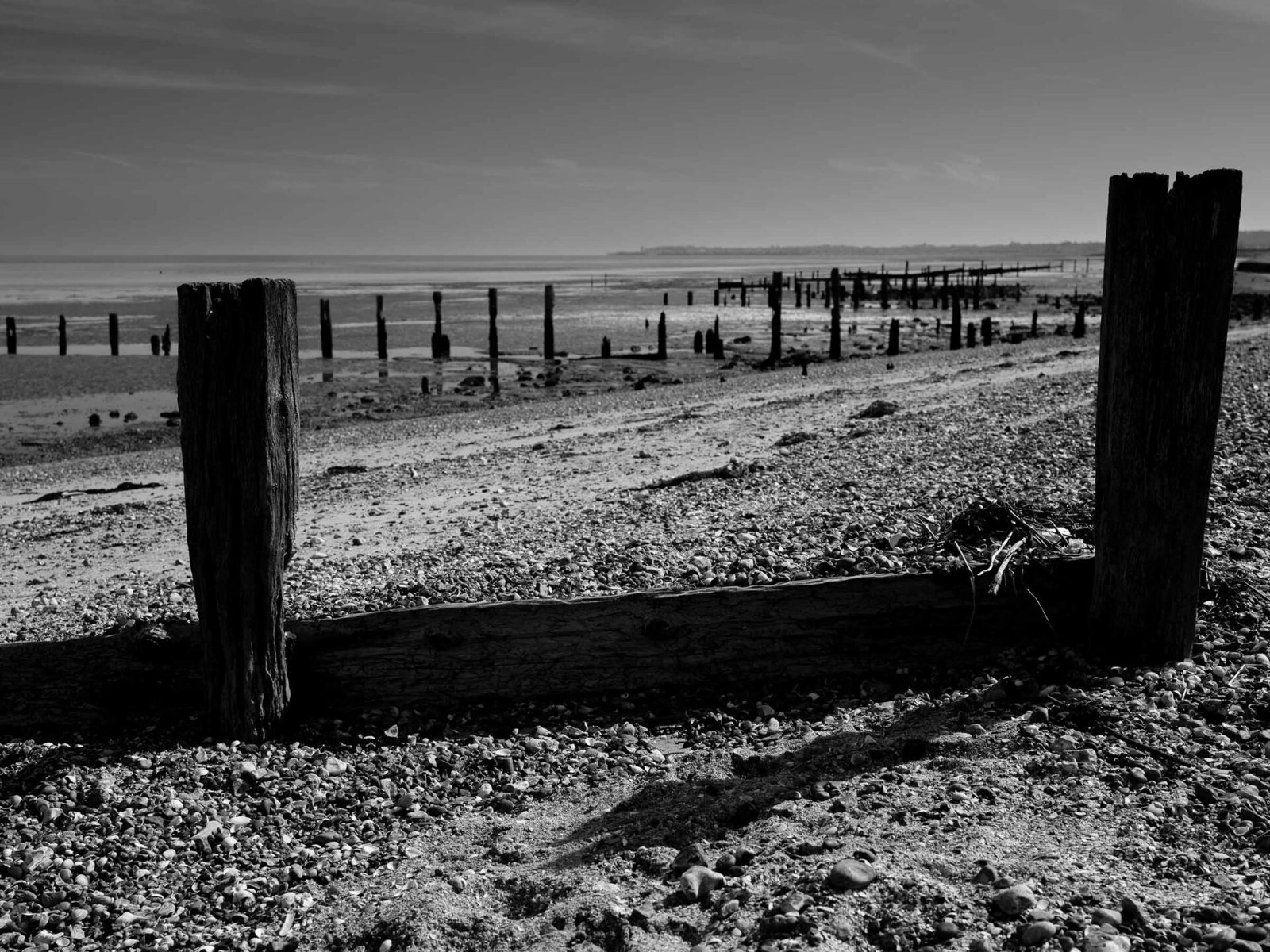
Parking by the coastal path I headed out on foot. It was simply the most beautiful still spring morning possible. The sea – strictly speaking The Swale which separates The Isle of Sheppey from mainland Kent – was retreating at low tide but you wouldn’t know it. The surface was like a mill pond such that any tidal retreat felt like it must have been taking place by osmosis rather than the motion of the water itself. A very light spectral haze floated across the surface. Looking out south over the sea wall I could just about make out the Kentish Flats Wind Farm at the point where the haze of the sea horizon melted into the haze of the early morning sky. My only company was the excited morning chatter of various estuary birds announcing to anyone that would listen what a beautiful, glorious morning it was to be alive.
Eventually as I walked along the path I could see the solar farm on the horizon. Getting closer, the panels began to take on an ethereal luminescence all of their own as they reflected the glow of the early morning sun, sucking in its energy. Closer still and I began to see the regimental rows stretching away from the coast, their uniformity on the horizon only punctuated by the emergence of an electricity carrying pylon or two, transporting the precious energy created on the farm out and onto the grid, a small stream helping to quench the thirst of our never-ending demand for energy.
Cleve Hill produces 373 megawatts of electricity, that’s enough clean fuel to power just over 100,000 homes. It covers a piece of land about the size of a small English market town – think Ludlow or Ely. It is the UK’s largest solar farm and, as a result, has been designated a nationally significant infrastructure project.
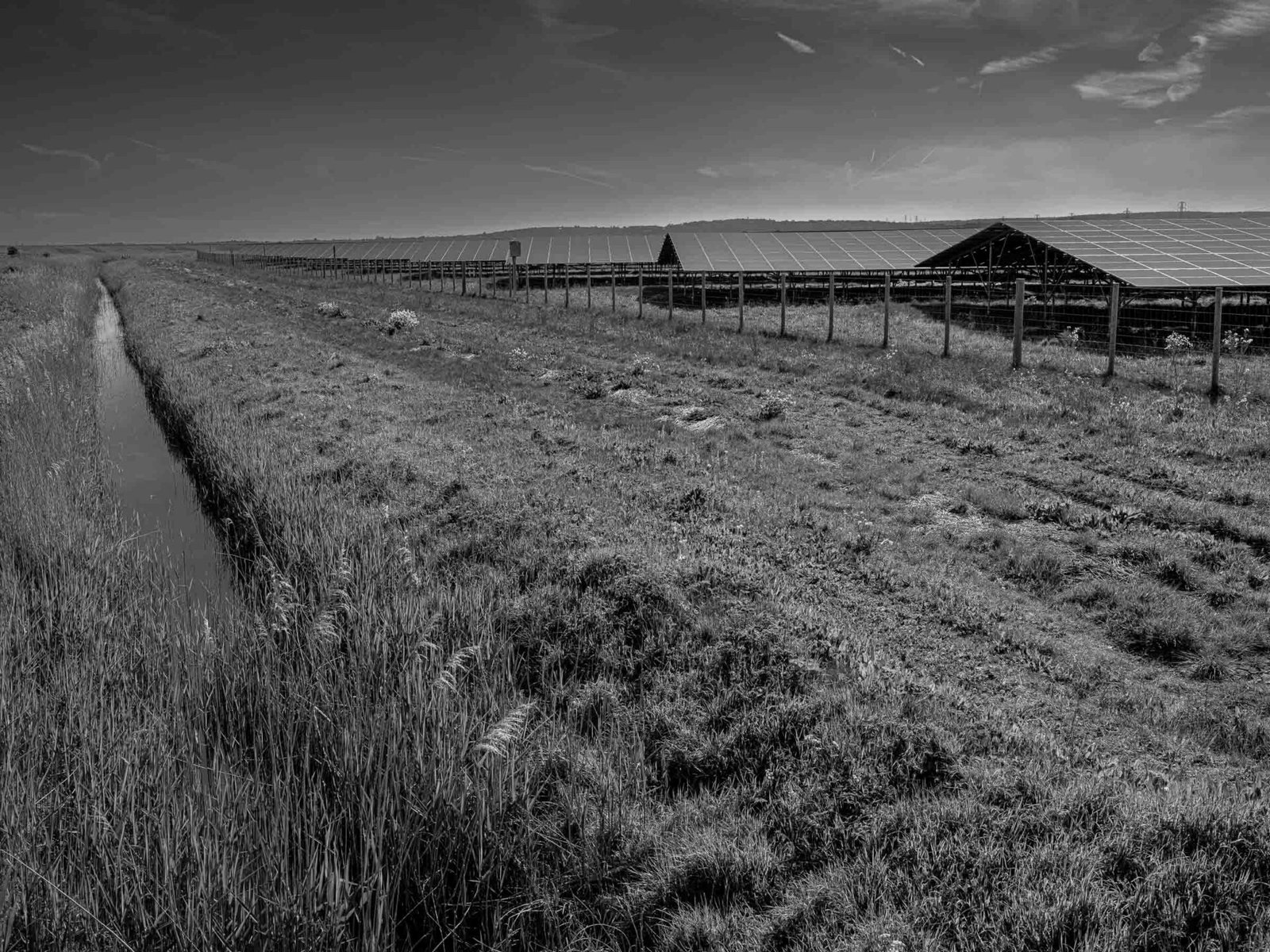
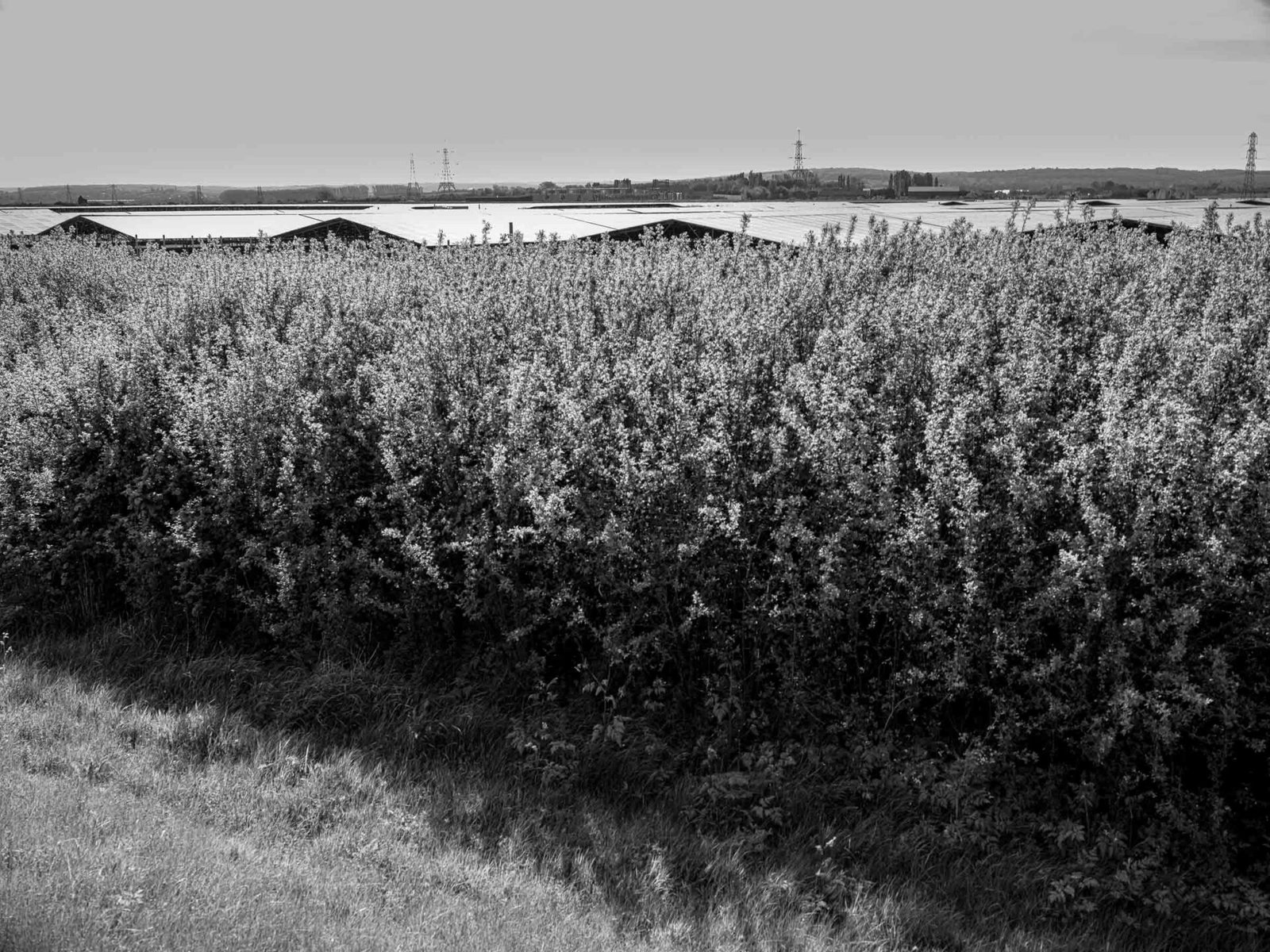
However, whilst the scale feels undoubtedly impressive, the lack of a natural vantage point means it is not that easy to capture through a camera lens. Furthermore, there’s another issue – it’s simply not that easy to get that close to the panels themselves. The site – privately owned – is fenced off with lots of signs warning about danger of death from high voltage equipment punctuating the perimeter fence.
Nevertheless, you are able to get just about close enough to understand the size of each of these solar panels. You could comfortably pass underneath one at the point at which one of its edges reaches up towards the sky. Each panel is the size of the roof on a typical semi-detached house. I could imagine walking under the array to feel not unlike how it would feel to walk along a street but passing from home to home through each house’s eaves.
However, my overwhelming feeling at this point of the visit was one of frustration – at how difficult they were to find, and that I couldn’t get close enough or get a decent enough vantage point to really understand what you were looking at, to really understand and capture through my lens the impact this undoubtedly huge site has on the place in which it is located.
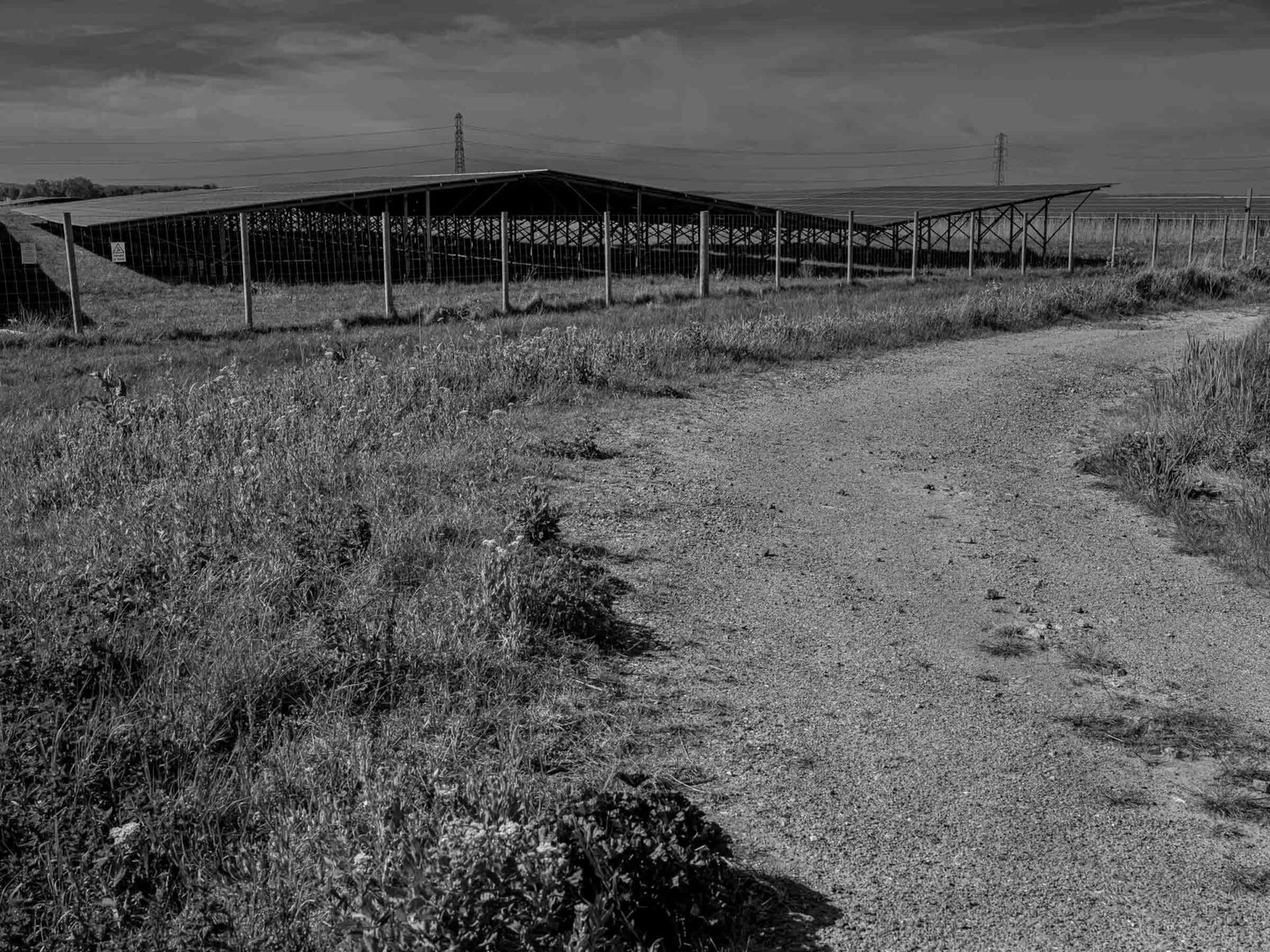
Despite its proximity to the tidal marshes of The Swale – a site of special scientific interest because of the diversity of wildlife to be found there, the site felt strangely sterile. There were no birds and insects darting around the panels, no wild flowers to be seen on the grass that carpets the ground beneath the panels, no sound of bees buzzing around doing their thing. In fact it felt slightly eerie and quiet – so much so that maybe I imagined that the panels themselves were emitting a background hum as they hoovered up the Sun’s boundless energy.
I couldn’t help but contrast how this site felt compared to what I’d found in the area surrounding Dungeness power reactors, an RSPB reserve, teeming with water birds and those that use the reserve as a stopover on their migrations.
And this is one of the trade-offs we will have to negotiate. Solar farms will need to be developed on a monumental scale for the UK to fully transition away from carbon. By one estimate we’d need about 280 Cleve Hills to fully replace fossil fuels in our energy mix (that’s before you start accounting for the seasonal variation in output of solar and the energy storage conundrum).
Covering swathes of the country in these shiny, silicon panels may well come at the expense of wildlife and some of our precious ecosystems and habitats. To be fair to the developers of this site they have worked with the Kent Wildlife Trust to think about how biodiversity can be encouraged back to the site after construction has finished. Perhaps if I came back here in a few years it would feel different.
As I walked further along the periphery of the site, I found myself contemplating what this solar farm represented. Was this a glimpse into the future, a future where large chunks of our open space are covered in shiny, luminescent photovoltaic cells (or of course large wind power turbines)? And yet, unlike nuclear generators or wind farms, there is no brutalist architecture that forces you to admire or be repulsed, there are no majestic blades that demand you take a position on how a field of turbines destroy or complement a view. The solar farm is just there in its uniform neatness, present and producing, but somehow sterile and slightly soulless.
I realise this is entirely a photographer’s view of the world. I’m perhaps more selfishly interested in aesthetics and the feel of a place than its purpose. But I was struck by an irony as I walked back to the car. Dungeness, a nuclear power station — perhaps the most feared and contested form of energy generation we have — sits at the heart of one of the most biodiverse nature reserves in the UK. Cleve Hill, a solar farm, sits beside a wildlife sanctuary yet feels sterile and lifeless. We are building this future to save our planet. But how natural it will feel when we get there is another question.
Leave a Reply