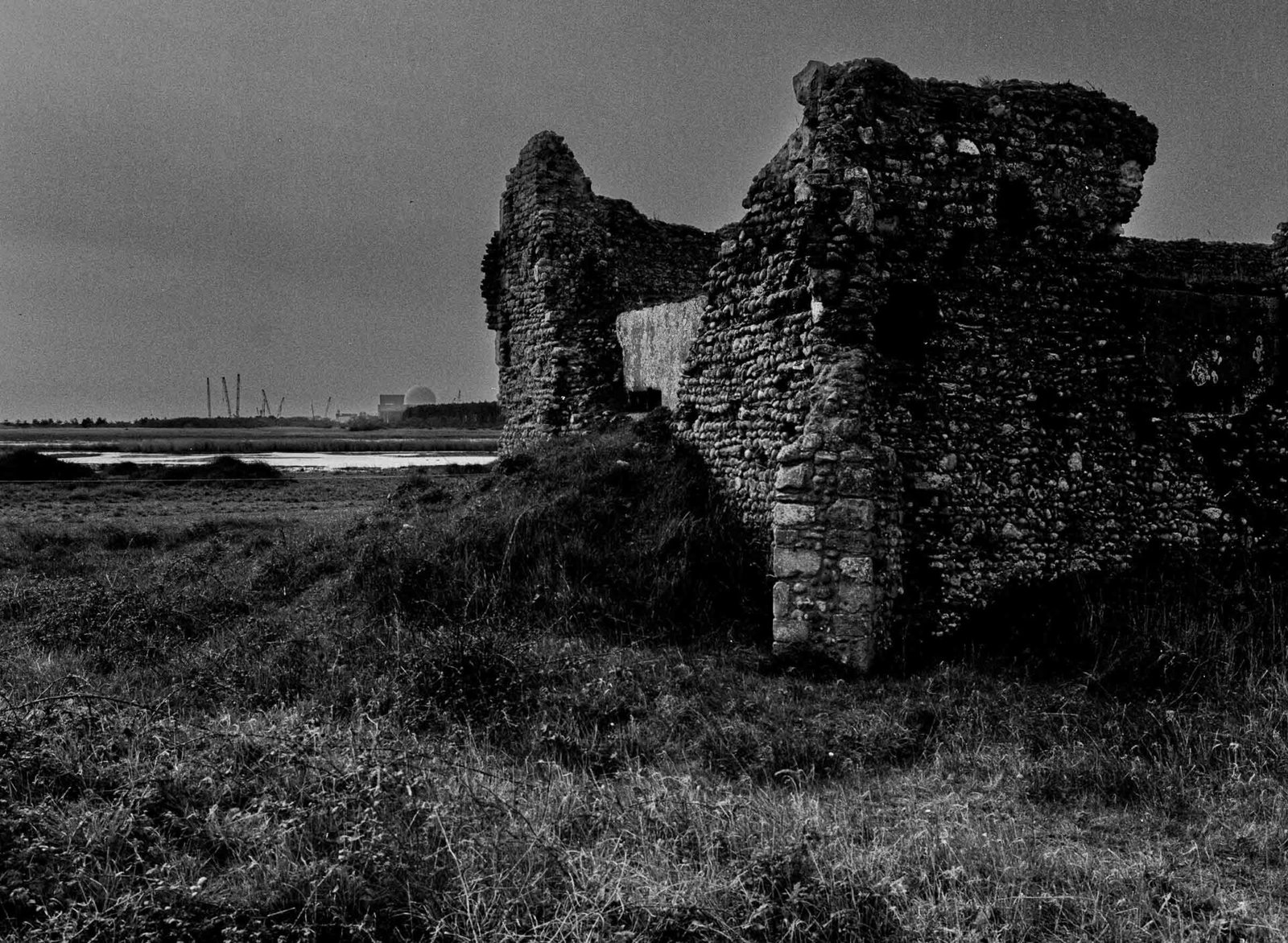
I came back to Sizewell because I felt the first visit had left something unresolved — not in the essay, but in me. A few days alone in Suffolk with a camera and my dog Lexie. I wanted to see what I’d missed.
As I approached Sizewell, driving through a landscape of red and white traffic cones, bare and scarred earth, heavy machinery and portakabins, the sense of destruction was still as palpable on this visit as it was previously.
Arriving at Sizewell Beach – the seafront onto which the nuclear reactors face, was, however, a slightly different experience. On the seaward side of the power station, save for a platform visible a few hundred meters out to sea, the impact of the construction work was much less tangible. The local cafe selling tea, cake and bacon butties was still very much in business. The car park had a splattering of empty cars, their owners out exercising their dogs on the beach.
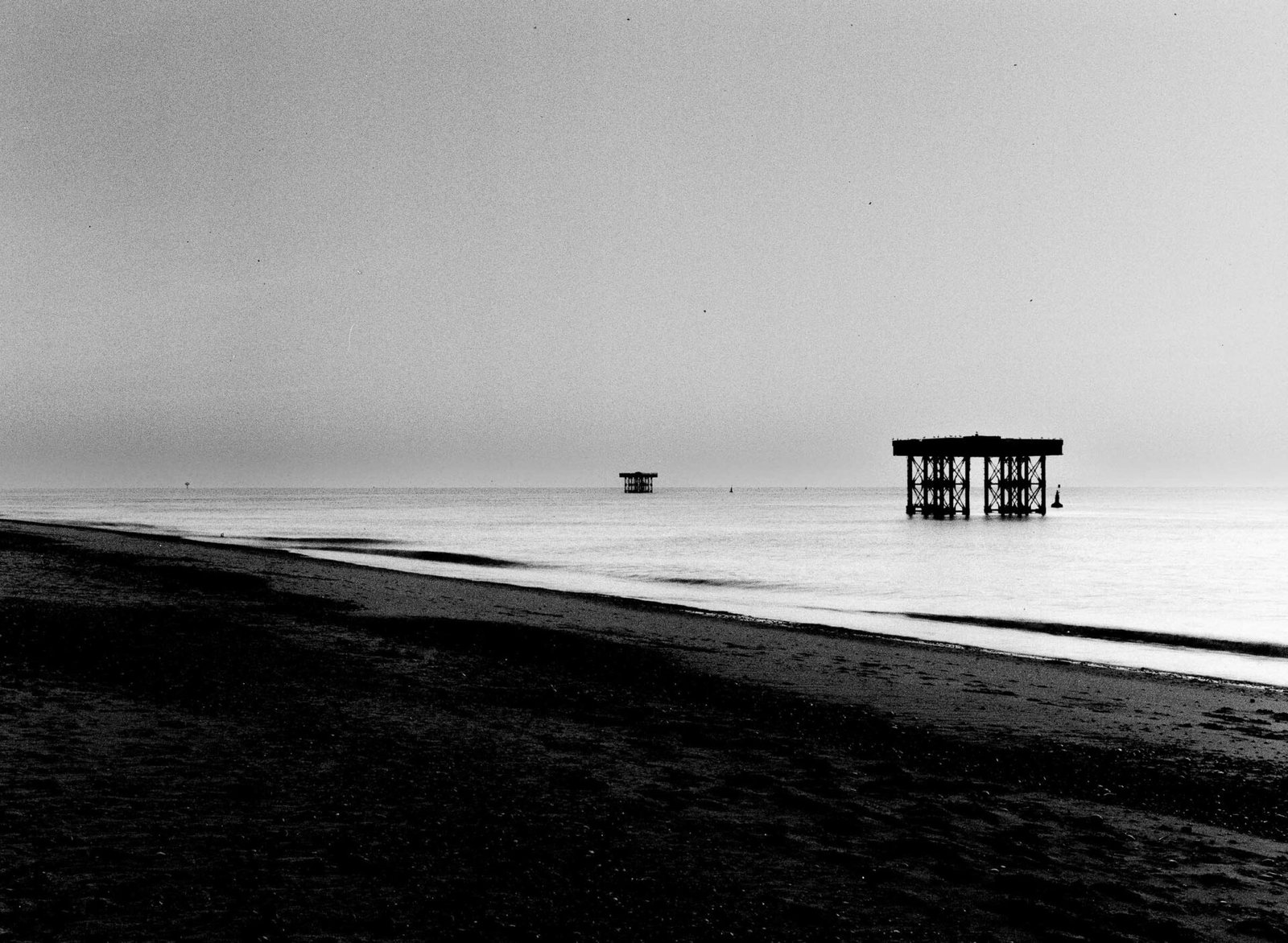
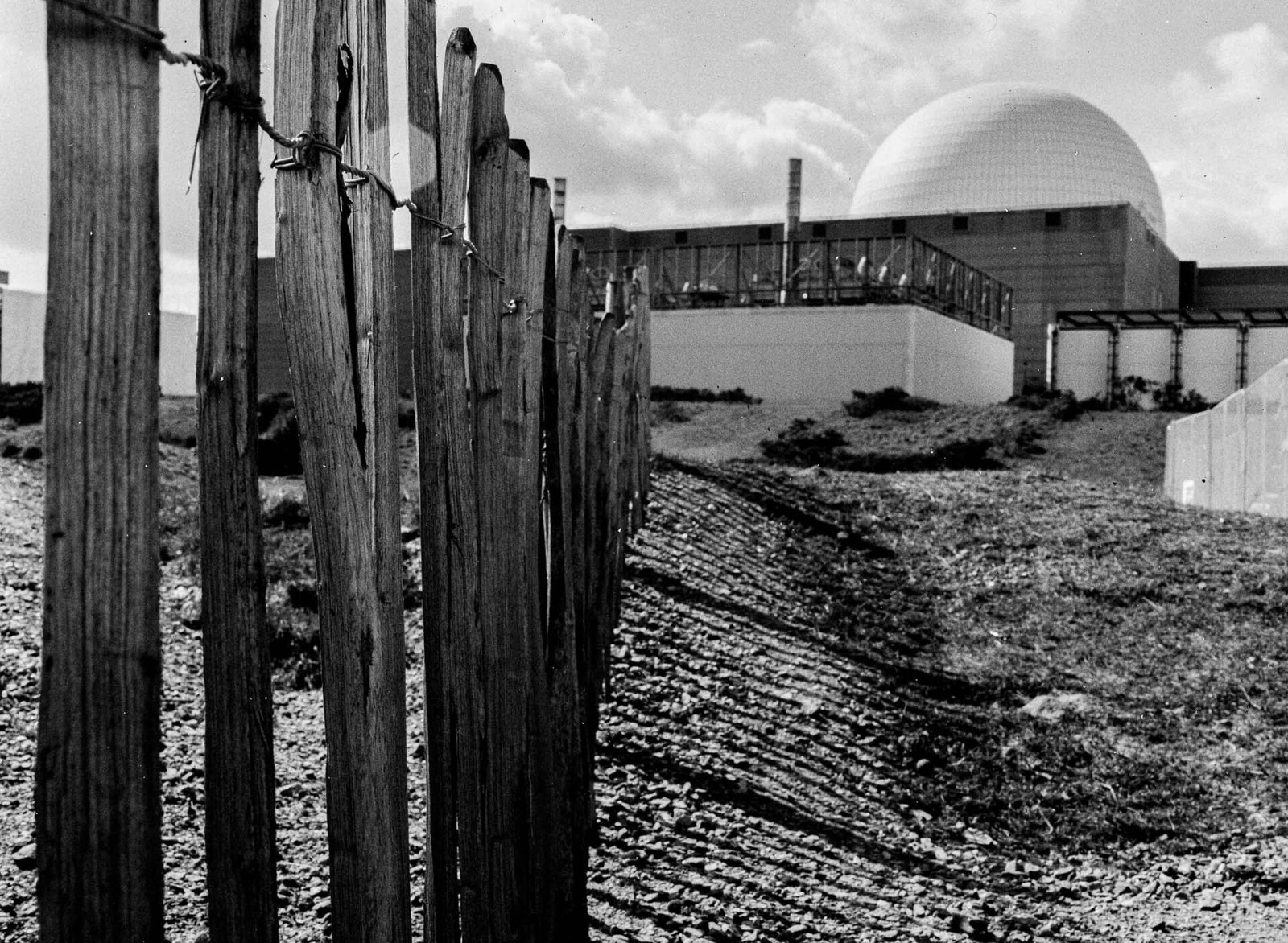
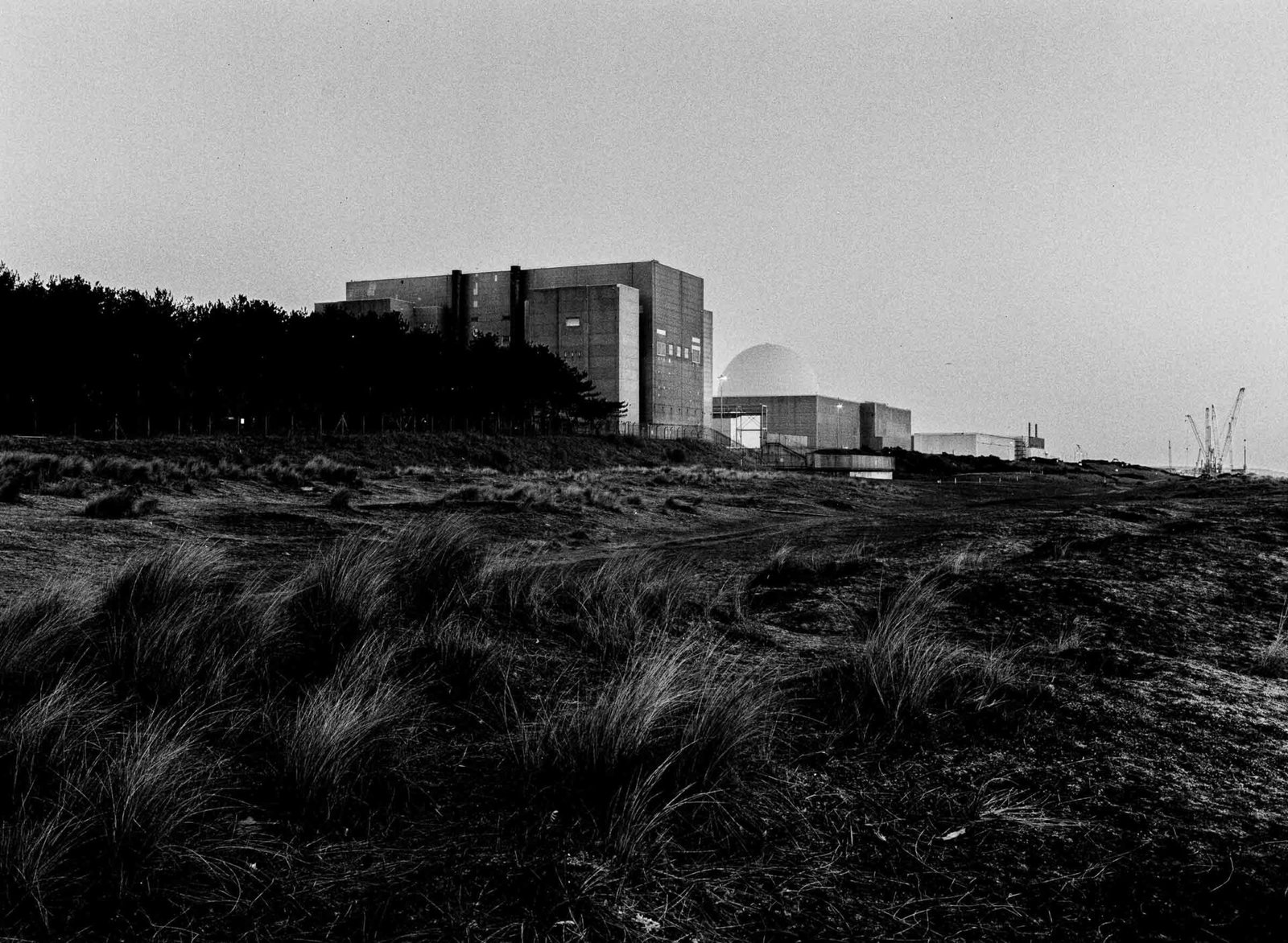
Walking along the beach from the car park, I was surprised by just how close to Sizewell A and B you could get. Standing some 30 yards away from it, its concrete scale obscuring the Sun’s low trajectory in the early spring sky takes the breath away. Standing in its shadow is a visceral reminder of how small our footprint is as individuals, and yet how big our collective impact has been on the world we live in. Sizewell A is an old magnox type reactor that stopped producing power some 20 years ago yet still dominates the landscape for miles around.
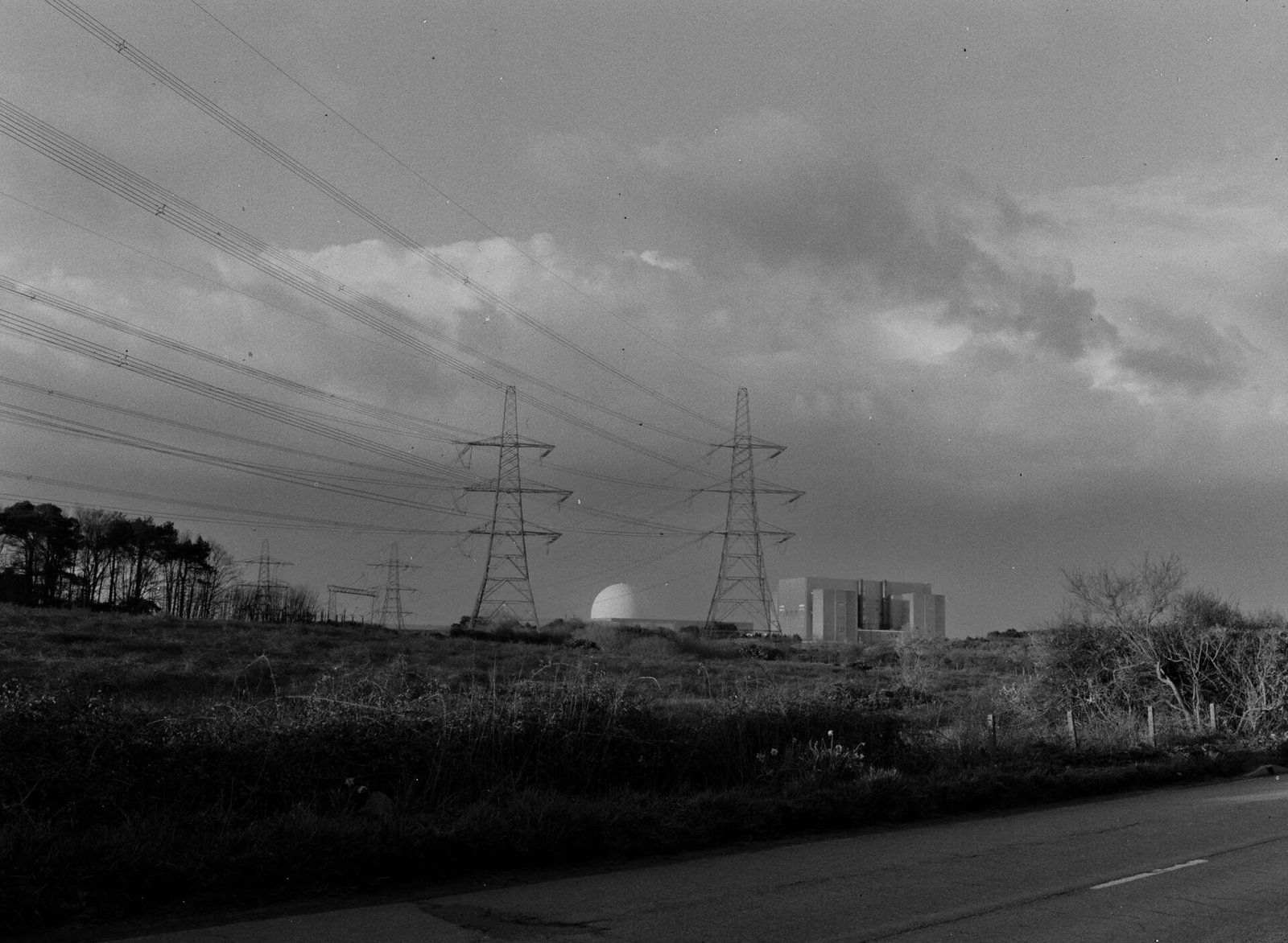
Sizewell B is a more modern pressurised water reactor and is currently due to continue generating power until 2035. The B reactor is a different beast altogether. It looks like a giant golf ball, its sparkling white exterior almost luminescent in certain light. The reactor’s domed peak sits on top of a rectangle steel clad box, which has an uncanny resemblance to those monolithic distribution centres you often see just off motorway junctions.
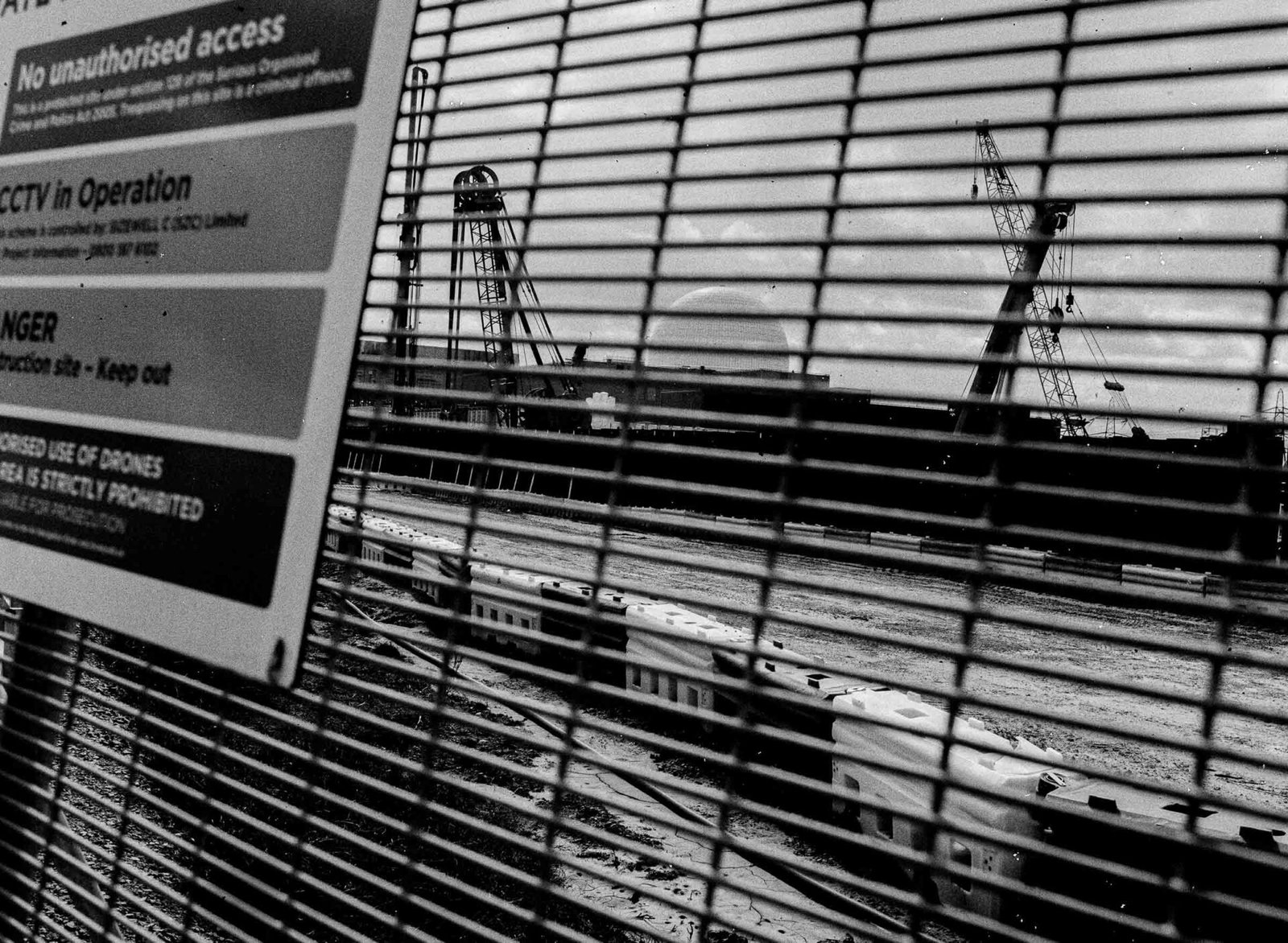
But of course these two reactors are not the only story. Walk a little further north and you quickly encounter the main construction area for Sizewell C itself. The footprint of the construction work is easily two times the footprint of the current reactors put together. The perimeter fence is not easy to peer through, but you do nevertheless get a sense of the just how much man and machinery power is needed to construct a new nuclear reactor (or at least the type of new reactors we have chosen to commission here at Sizewell and at Hinckley Point in Somerset). The scale of the endeavour is undoubtedly huge.
That scale is not easily captured through the lens of a camera and as I stared through my viewfinder trying to find an angle that would do it justice I was also left with a feeling of apprehension. When Sizewell C is finished what will its size be compared to the current reactors? A and B already dominate the relatively flat local landscape. The new reactor will undoubtedly be much bigger – how will it feel to walk through the otherwise tranquil local woodland and marshland, or along the beach in its shadow?
The next day I took a different walk out to the coast hoping to get a sense of how the reactors fit into the broader landscape. I found myself arriving at the ruins of the old Leiston Abbey. The old abbey sits at the edge of Minsmere Marsh – a site of special scientific interest due to its unique and fragile coastal marshland environment and an RSPB reserve that is home to a number of endangered species.
The old Abbey was originally only accessible by a causeway and surrounded by marshland and tidal waters. It originally stood as an island, isolated from the nearby communities of Sizewell and Dunwich. Those villages were much bigger in medieval times and much of them has been lost to coastal erosion (Dunwich was a thriving port town until the 14th century when much of the harbour was lost in a storm surge). The abbey itself had to move inland due to frequent storm surges and flooding. In fact, coastal erosion is very much still a fact of life on this coast; take a walk a bit further south along the coast at Thorpeness and you will see homes now abandoned precariously balanced on fast eroding cliffs.
Circling the abbey’s ruined walls it still feels like you are somewhat isolated from the world around you. You can see how, in the 14th century, this would have been a peaceful and reflective space for the order that lived here. However, in the 21st century that feeling of isolation is rudely interrupted by the bright white dome of Sizewell B, looming menacingly in the distance along the coast. I wondered how much more visible and imposing Sizewell C would be in this vista, how it would alter the sense of peace I was still able to found in the shadow of the abbey ruins.
The juxtaposition of an old, abandoned place of worship, its ruins gradually fading back into nature, and the reactors in the distance was jarring. The old abbey served a commitment to faith and a higher purpose. The reactors serve our belief in engineering and the generation of the power it takes to serve our modern religion of consumption.
The viewfinder has a strange way of focusing your mind. The focus it brings sharpens your understanding of what you are seeing and the context in which you find it. As I framed the ruined abbey with the reactors in the background I was asking myself if there was a lesson here amongst the ruined abbey and neighbouring villages that have been slowly eaten away by the encroaching sea.
Our engineering and technological hubris makes us feel all powerful. We have built these reactors and are building a new one right up against a fast-eroding coastline. Were the old ruins here and the lost houses and villages along the coast a warning that, no matter how omnipotent we think we are, no matter how much we think we can control the world around us, nature will always prevail?
Leave a Reply