We live in a world where photography is disposable. We each carry an incredibly powerful camera in our pockets. We’re bombarded with hundreds, if not thousands of images daily. I – like I’m sure many of you – scroll past beautiful images posted online without giving them a second thought, swiping onwards past a photograph in a few seconds that, twenty years ago, you might have spent considerable time looking at and engaging deeply with.
What does it mean to consider yourself a photographer in this age of image saturation? What does making a photograph mean in an age when a huge bank of servers somewhere in a desert in California can create an image that some photographers would have worked for years to achieve?
The more I’ve thought about this, the more I’ve come to realise that – for me – if photography is going to mean something today, it has to come from a place where I have thought deeply about the subject I am photographing and where I feel there is a story I want to convey to the viewer. That is why much of the time when I am thinking about my photography, I am thinking about it in the context of longer term project work where there is a theme I want to explore, or a story I feel I want to tell.
Frequent readers of Frame to Grain will know that one of the themes that I explore with my photography is that of our energy consumption, looking at the environmental impact of our insatiable demand for electricity generation. But there is another theme and story that also interests me – those communities that live on the edge of Greater London in places that feel both proximate to everything the megacity has to offer, but also somehow marginal and detached from the cosmopolitan elite and wealth that dominate it.
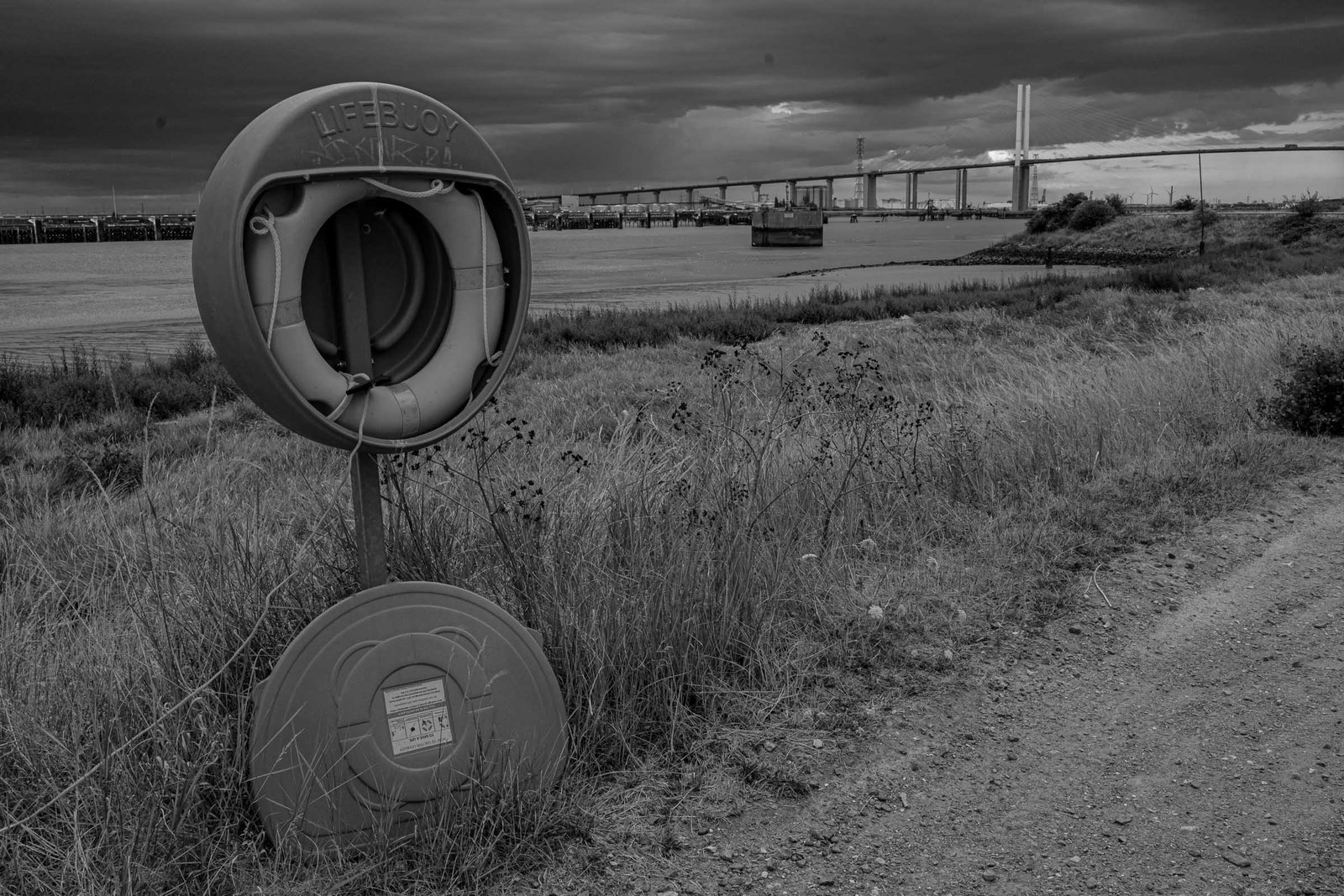
It was this interest that took me to Long Reach on the Kent side of the Thames at the Dartford Crossing, on the opposite bank to Purfleet, a place I have already written about in my piece Invisible.
Long Reach is a place sufficiently remote from the rest of the population of London that it used to be the site of an isolation hospital that housed people with small pox. Today the hospital has gone, most of the land redeveloped, but this still feels like a place isolated from the rest of the urban sprawl around it.
The area is now the home to the community that occupy the Long Reach housing estate, their only company in this part of the Thames’ flood plain, a number of huge warehouse distribution centres given the area’s proximity to the M25, marshland, and the Long Reach sewage works, one of the biggest in the Greater London area and further evidence of the area’s isolation from the rest of the population.
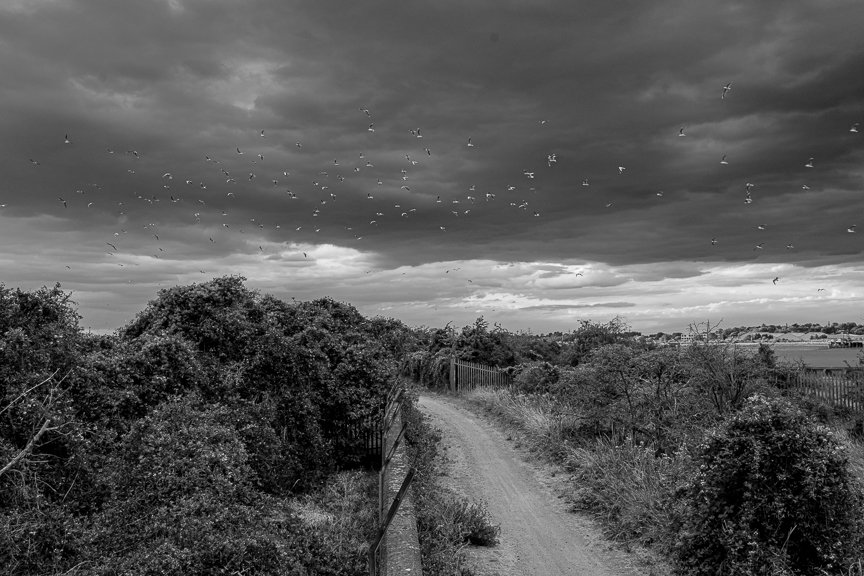
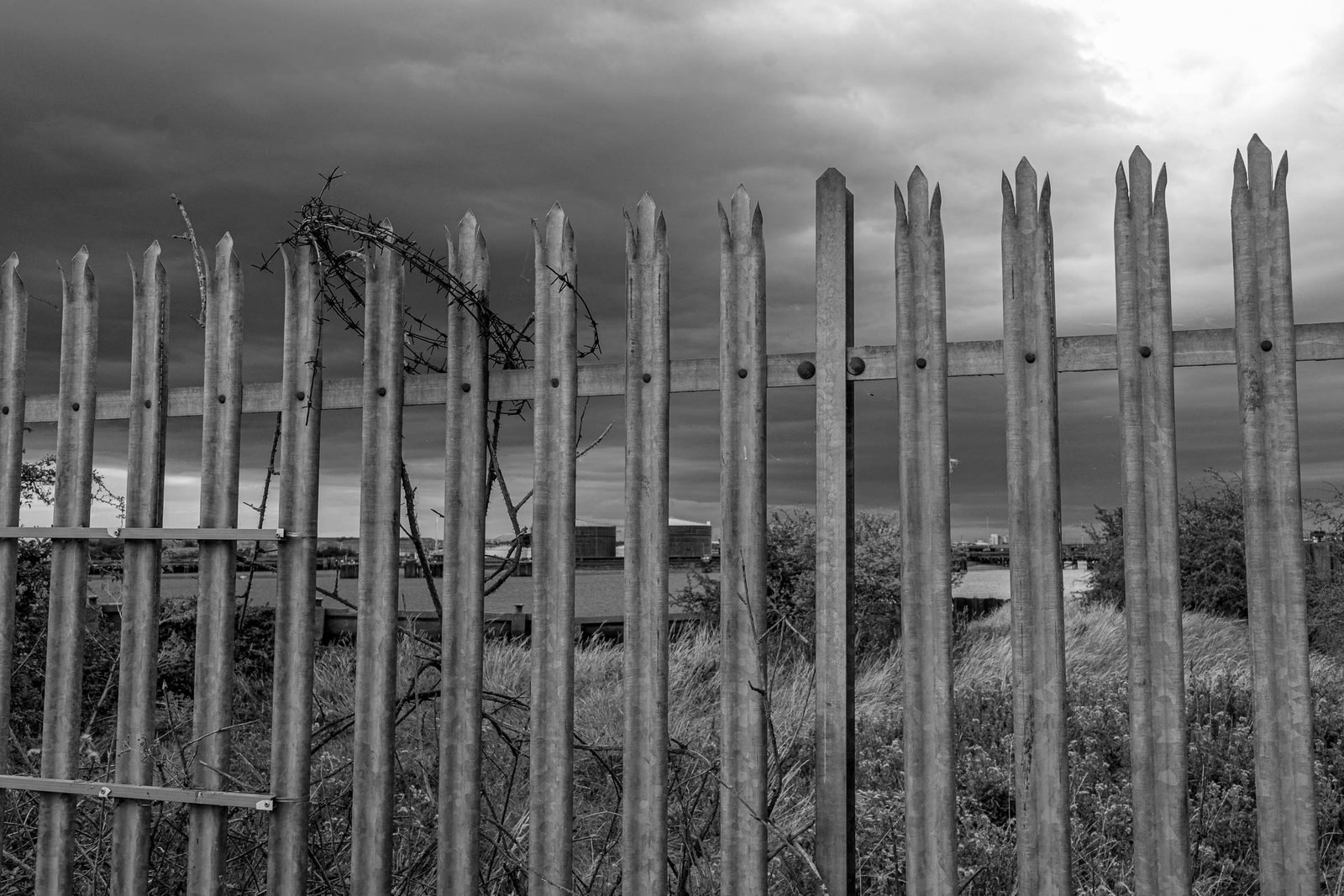
Reaching the riverside from the housing estate takes you alongside the sewage works, barbed wire fences separating the path from the sewage tanks – though who in their right mind would want to stray any closer to the tanks I’m not sure. But the seagulls don’t seem to mind the tanks and I photograph them swarming above and I notice a few of them resting on the water of the tanks.
When you reach the river you are presented with a broad view of the river, over 200 metres wide at this point, looking across to the petrol storage tanks on the opposite side. Looking downstream, the QE2 bridge looms in the distance, its majestic sweep across the river carrying the endless streams of traffic circumventing the capital.
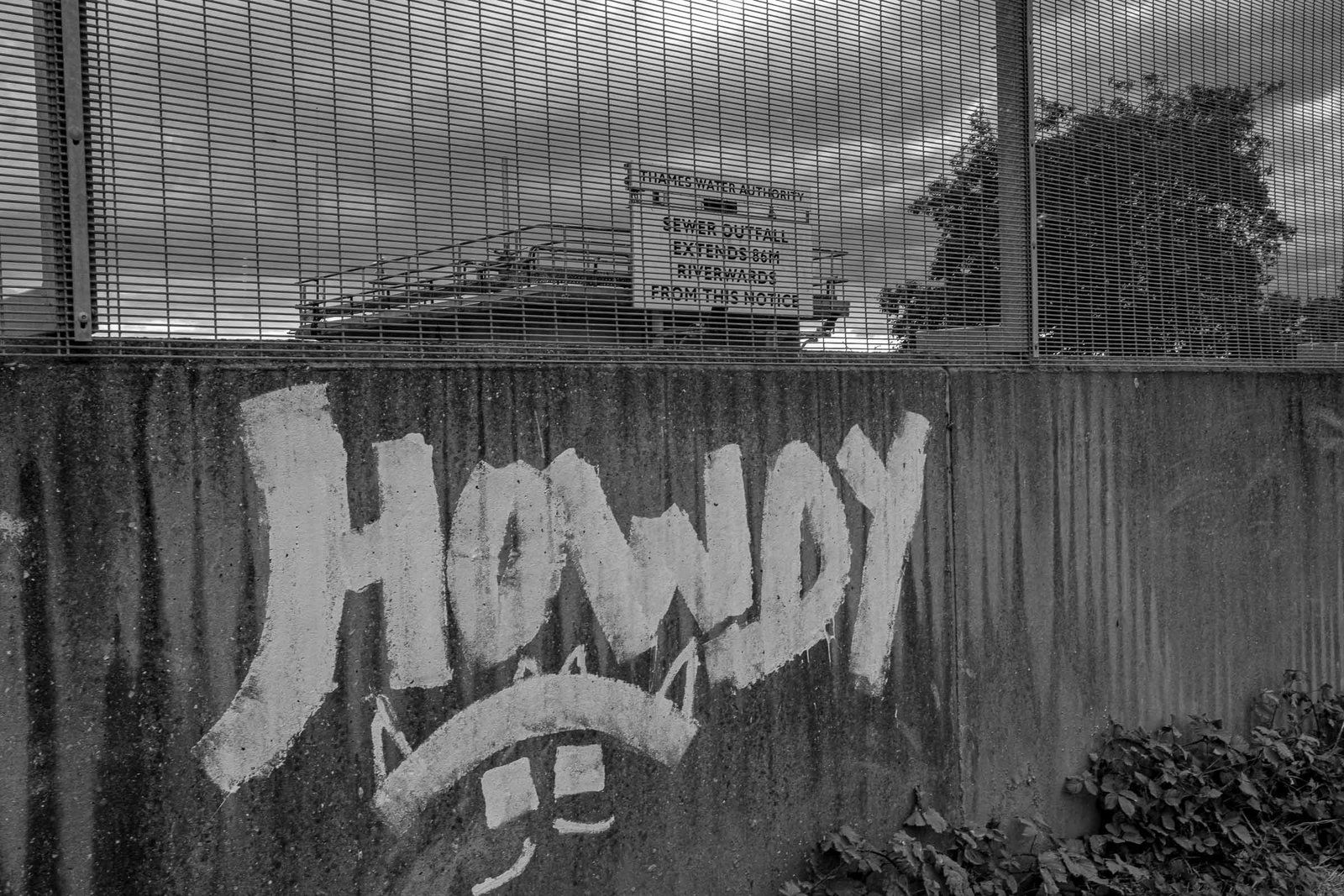
I walk upstream and continue along the edge of the sewage works. Graffiti adorns the walls and fencing separating the river path from the works. I’m greeted by a rather jovial “howdy” that, rather ironically, sits against the backdrop of the sewage outfall warning sign. Turning back inland and up the flood banks I come across a graveyard of motorcycles, three of them burnt out and left in a small corner of the wasteland that surrounds me. Burnt out and down to their metallic shells, there is the feeling of skeletons about them that causes me to approach them with caution. It feels like I have stumbled on the remains of something that was once alive.

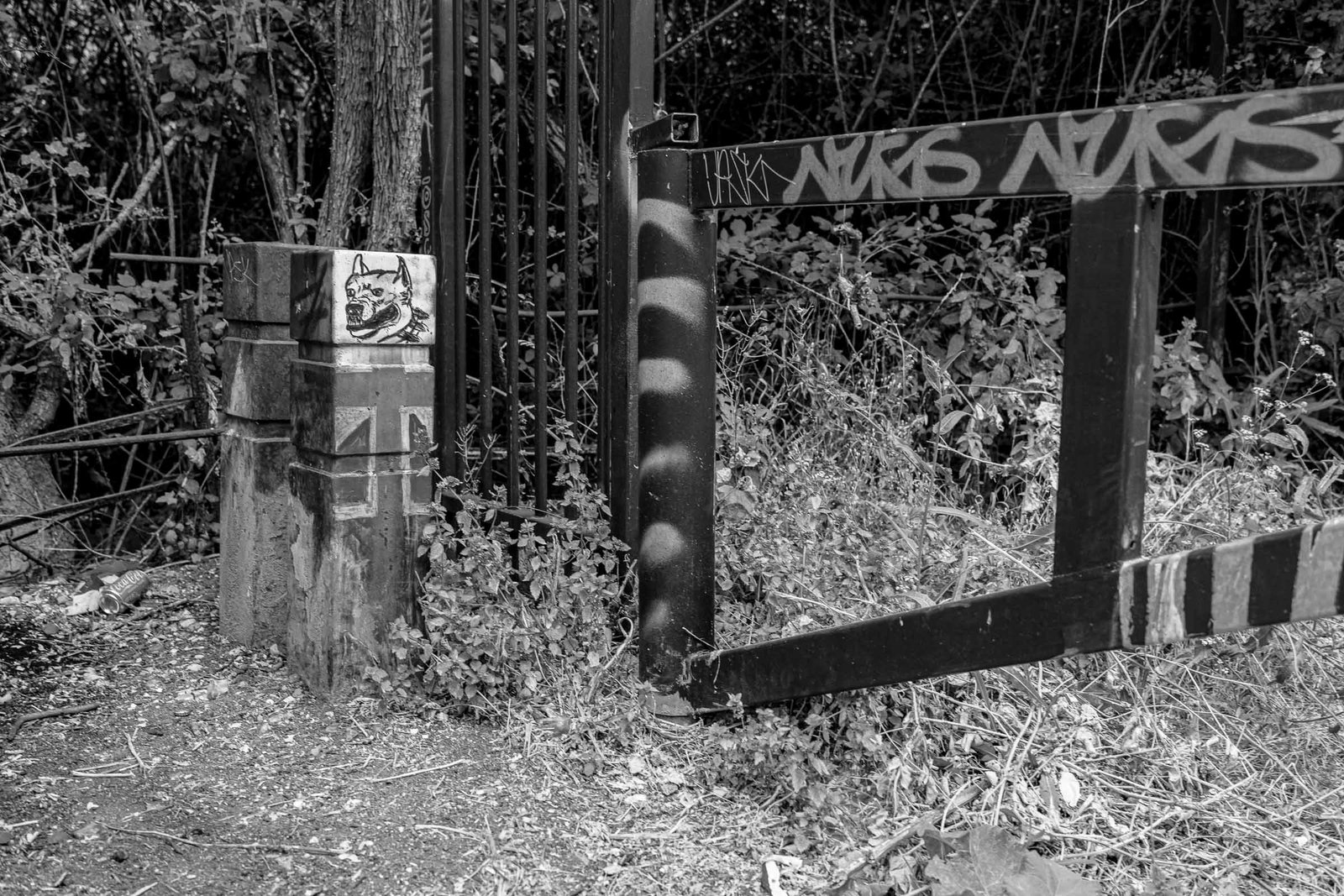
Walking back towards the housing estate taking a long, straight path that cuts across the marsh land and towards the site of the old hospital, I come across a gate that was clearly put there to prevent motorcycles etc progressing any further from the housing estate towards the river. Obviously, the remains I’ve just photographed prove that this ambition was not quite accomplished. However, I can’t help but notice the graffiti of a Union Jack and bulldog on one of the nearby fence posts, and I wonder about the politics of this community which feels somehow marginalised from the metropolitan elite a few miles upstream.
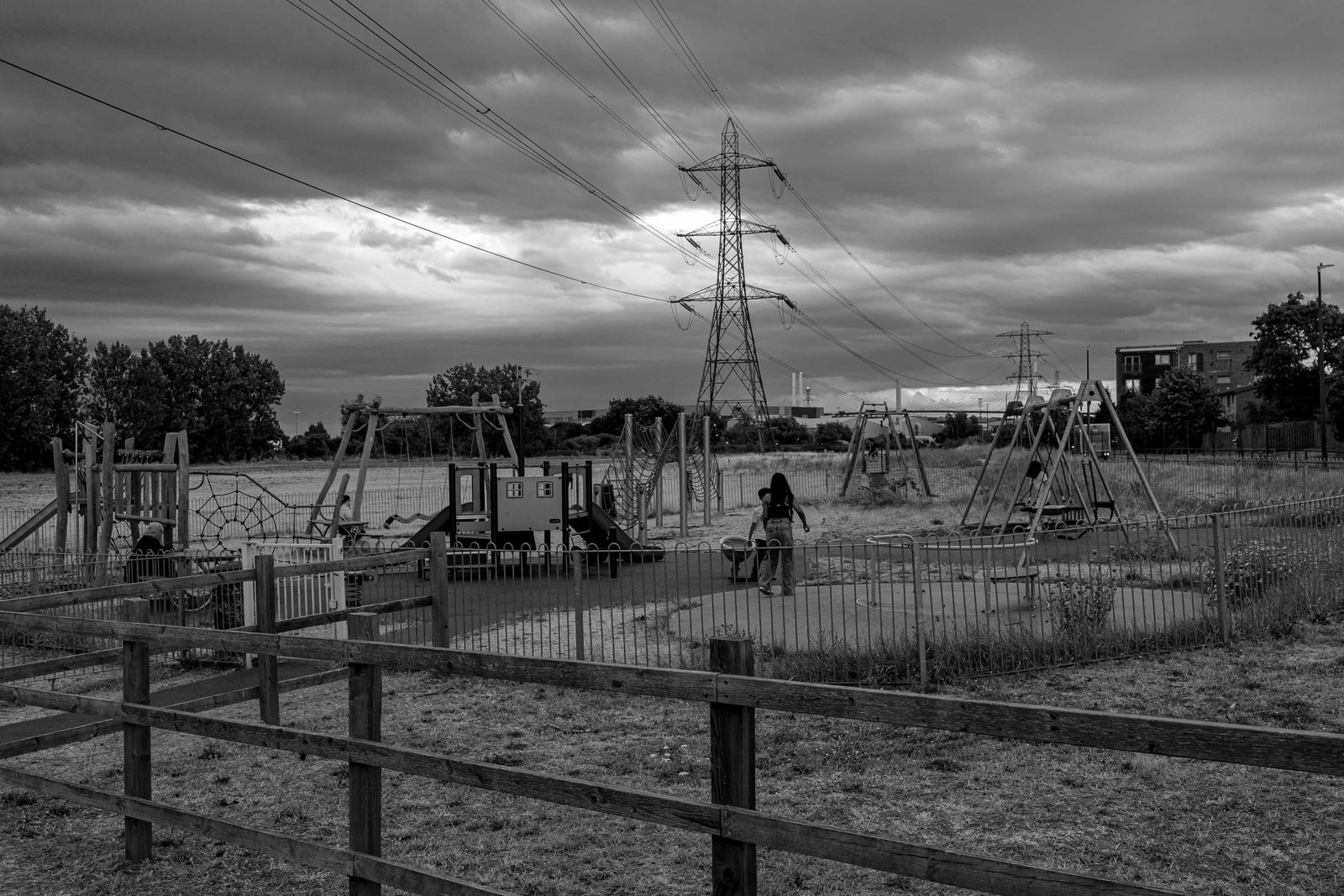
That thought sits with me as I finish my walk passing a playground and playing field that has the Dartford Crossing as its backdrop. Looking at the kids playing in the playground I wonder what they feel about where they live. Do they appreciate their relative isolation from the rest of Greater London? What social conditioning will influence their development and life opportunities?
These are questions that arise from intentional observation, from moving through a place and noticing how details accumulate into meaning. A bank of servers could generate these images, but not the feeling and understanding that connects a burnt motorcycle, Union Jack graffiti, and a playground into a question about futures shaped by marginalisation.


Leave a Reply